
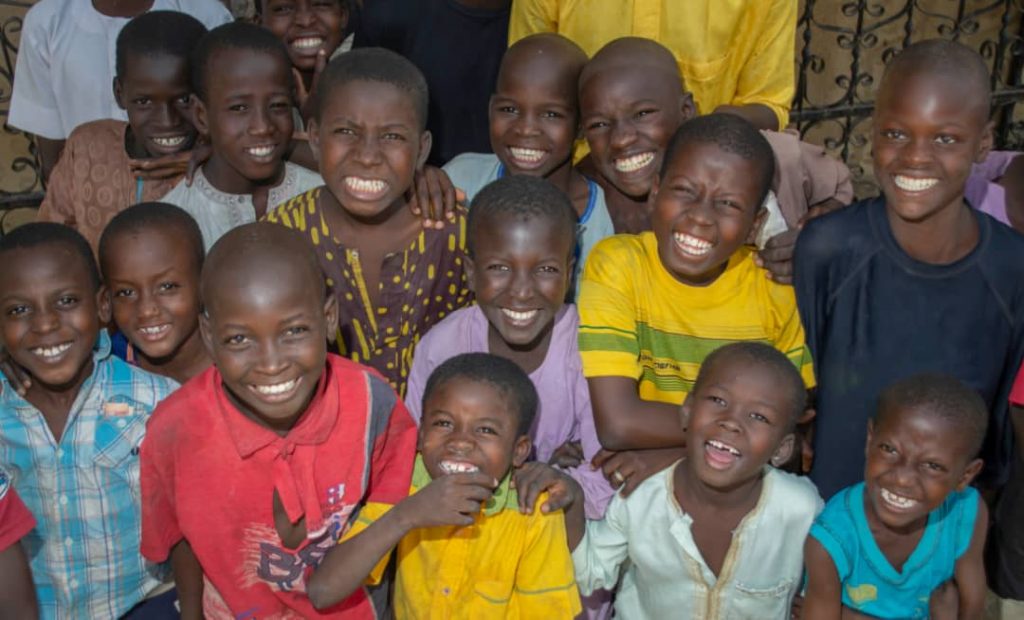
The innocent smiles on the faces of children during a photography session, regardless of socioeconomic status, are instructive.
It can be used to portray the conditions of many Africans who wear wry smiles while they are buffeted and pummelled by degrading conditions.
It is generally believed that smiles mean hope, courage, resilience, and determination to keep one’s head above the murky waters of man-induced misery. The average African toils from cockcrow till dusk to eke a living in a continent where the peasantry is side by side stupendous wealth.
Again, we admit that there is a generally accepted benchmark for suffering across the board. For instance, the United Nations pegs the poverty line at $2 a day. If anyone earns below that, such a person is in abject poverty.
Most Africans do not even earn half a dollar a day. Yet they smile. That’s hope. According to Ron Gutman, in a recent study, UC Berkeley and Wayne State University measured the width of alumni yearbook pictures and pre-1950 MLB player baseball cards respectively. They found that the wider the measure of a person’s smile, the longer that person lived and had a more fulfilling life.
This is not just a Western phenomenon. A separate study done by Paul Ekman in Papua New Guinea found that the aboriginal people perceived another person’s smile, in the same way, the rest of the world does, “to express joy and satisfaction.”
Smiling can be used as an emotional superpower. Gutman says that on average a person will smile around 20 times per day, yet “those with the most amazing superpowers are actually children, who smile as much as 400 times per day.”
Recently, a German study took fMRI images of people smiling and found “that facial feedback modifies the neural processing of emotional content in the brain, in a way that helps us feel better when we smile.”
This research is evidenced, in part, by photographs of people who live in poverty. When photojournalists are on assignment in areas of extreme poverty—in conditions that would strip most people of hope—smiles are spread across the faces of children.
Sebastian Cuvelier witnessed this when he traveled to the slums of Manila for a two-month stay. He took pictures of children playing in the filthy streets, children taking baths in a blow-up swimming pool due to the lack of a proper bathroom, a mother smiling as she watched her children play and people living in make-shift houses.
The people of Manila are living in conditions that are heartbreaking, but their smile is infectious, lights up their eyes, and draws the viewer in. Their hope shines through, a life that is grounded in family and not letting poverty steal their joy even when they have every reason to lose faith.
In all of these, we still think that a smile based on a satisfying life is a sine qua non for longer life. That is why PMDAfrica has come to ask you to join us as we end fake smiles and put on originally genuine ones. If we join hands together, we can drive poverty out of our land.
We can all say uhuru!